


Chapter 1 of 6
A seed needs three things: moisture, warmth and darkness. That is the whole list. Most of them show within two to seven days — and when they do not, it is rarely the seed at fault. It is usually too much water, or too much impatience.
This is the route most people take, and there is a good reason for it: you can see what is going on. A seed in soil is a week-long guess — on paper, you see the root on day two.
You need two plates, paper towel and water. Nothing else.
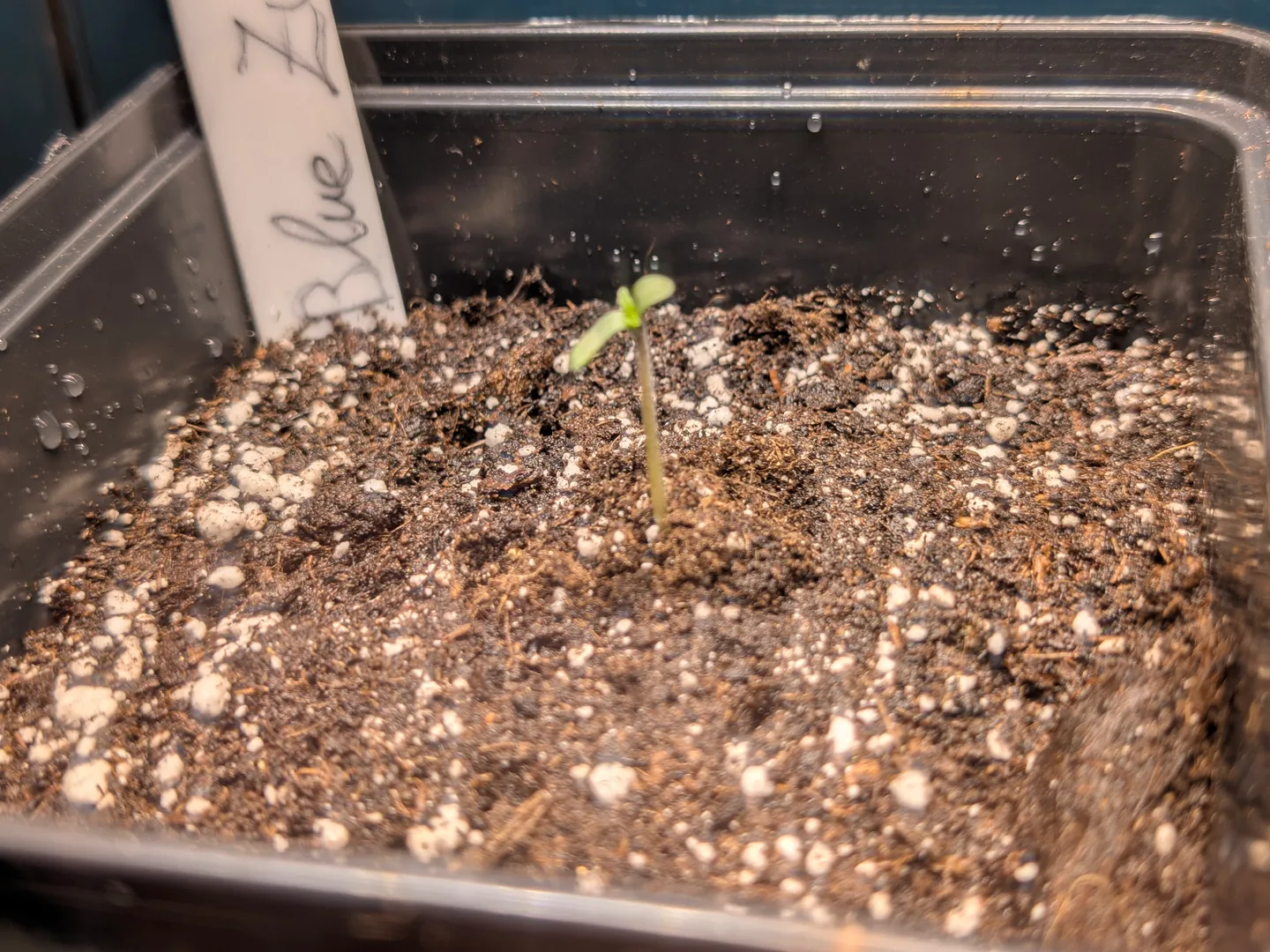
The seed can also go straight to where it is meant to stay. That saves you the most delicate moment of the whole business: moving a sprouted seed whose root is as thin as paper.
Everything speaks for it if you have only a few seeds and would rather not handle them at all. Against it: you spend a week not knowing whether anything is happening — and a seed that fails only tells you so once the others are long since standing.
A propagator with a clear lid is no luxury here. It is the simplest way to keep the moisture even, because it holds the humidity without you having to water.
About a centimetre (half an inch) down, no more. The seedling pushes upwards with its seed leaves in front, and all it has for the trip is the energy stored in the seed — every extra centimetre of soil is distance it cannot afford.
Pointed end down. If you are not sure which way round it goes, it is not critical: the seedling rights itself, it just costs it a day.
After that, stop watering and start misting. A spray bottle does the one thing a watering can cannot — it will not wash the seed back out.
First the shell splits and a white root comes out. It grows downwards, not up — that is the part you can watch on the paper towel. Only afterwards does the stem push up and pull the two round seed leaves with it.
Those first two leaves are round and smooth. They belong to the seed and are not true leaves; the first serrated pair follows a few days later. When the seed leaves eventually yellow and drop off, that is not a deficiency — their job is simply finished.
What does not happen in this stretch is growth you can see from one hour to the next. A seedling stands still for a few days while it makes roots. That is the point at which most people start changing something, and that is precisely the mistake.
Three causes cover almost every case, and all three are the surroundings rather than the seed.
It sounds like bookkeeping, and it is still the difference between a grow you learn something from and one where you are guessing all over again next time.
Four things are enough to begin with: the date the seed went into water or soil, the strain, the method and the day the seedling showed itself. The gap between those two dates is the number you will want on the next run — and no table on the internet can give it to you for your conditions.
From the day the seed leaves are up, the plant's clock is running. Everything that comes afterwards — potting on, the change of light, the start of flowering — is counted from that date. Leave it unrecorded and you are estimating later.
Most people begin when the seeds arrive. The other direction makes more sense: you know when you want to harvest, so you count back from there.
A run is made up of germination together with the seedling stage, the vegetative time, the flowering time and the drying. Germination accounts for one to two weeks of that and barely shifts the total; the flowering time is printed on the packet and is the most dependable figure in the whole sum. Together they give you the day the plant comes down — and another ten to fourteen days beyond that, the day the harvest is genuinely finished.
By hand that is four additions on the back of an envelope. The harvest date calculator takes them off you and works in both directions.
Usually two to seven days until the root is visible. Count the seedling stage with it — that is, until the plant grows under its own steam — and it comes to roughly one to two weeks. That same span is built into the harvest date calculator as the starting phase.
You do not have to. If you do, keep it to a few hours and move the seed into damp paper or soil straight afterwards. A seed left in a glass overnight gets no oxygen — at that point the soaking does more harm than good.
Both work. Paper shows you early whether the seed is alive, but it asks you to move the root. Soil spares you that handling and leaves you in the dark for a week. Few seeds argue for soil, plenty of them for paper.
No — quite the opposite. Until the seed leaves are up it should be dark. Light is only needed once the seedling clears the soil. Then it is needed immediately, otherwise the plant stretches and turns spindly.
Comfortable room warmth is enough; noticeably colder slows it down, noticeably warmer dries it out. The target figures for temperature and humidity in every stage — germination included — come with a calculator on the VPD page.
About a centimetre (half an inch), pointed end down. Too deep is the more common error than too shallow: the seedling only has the energy stored in the seed to reach the surface.
Almost always too much water, too little warmth or too much checking. Only once those three are ruled out is it worth suspecting the seed itself. Old seeds germinate more slowly and less reliably, but they do germinate.
As soon as the seed leaves stand above the soil. Start with considerably less light than later on — a seedling will not take full output. How much light actually arrives is something a lux meter will tell you, and the lux to PPFD calculator converts it.
Move it as soon as it is around half a centimetre long. Do not wait longer — the longer the root, the more easily it breaks. Handle the seed by the shell only, never by the root, and set it root-down into a hole you have already made.
By the first pair of serrated leaves. The two round seed leaves before them still belong to the seed. Once the true pair is there the plant feeds itself — and the seedling stage begins.
CRIS holds the start date, the strain and every step after it — offline on your phone, no account. On the next run you will know what worked on this one.