


Chapter 4 of 6
From now on the plant stops building structure and starts filling the structure it has. That shifts the work: intervene less, watch more — and once a week check whether moisture is sitting between buds that are getting denser by the day.
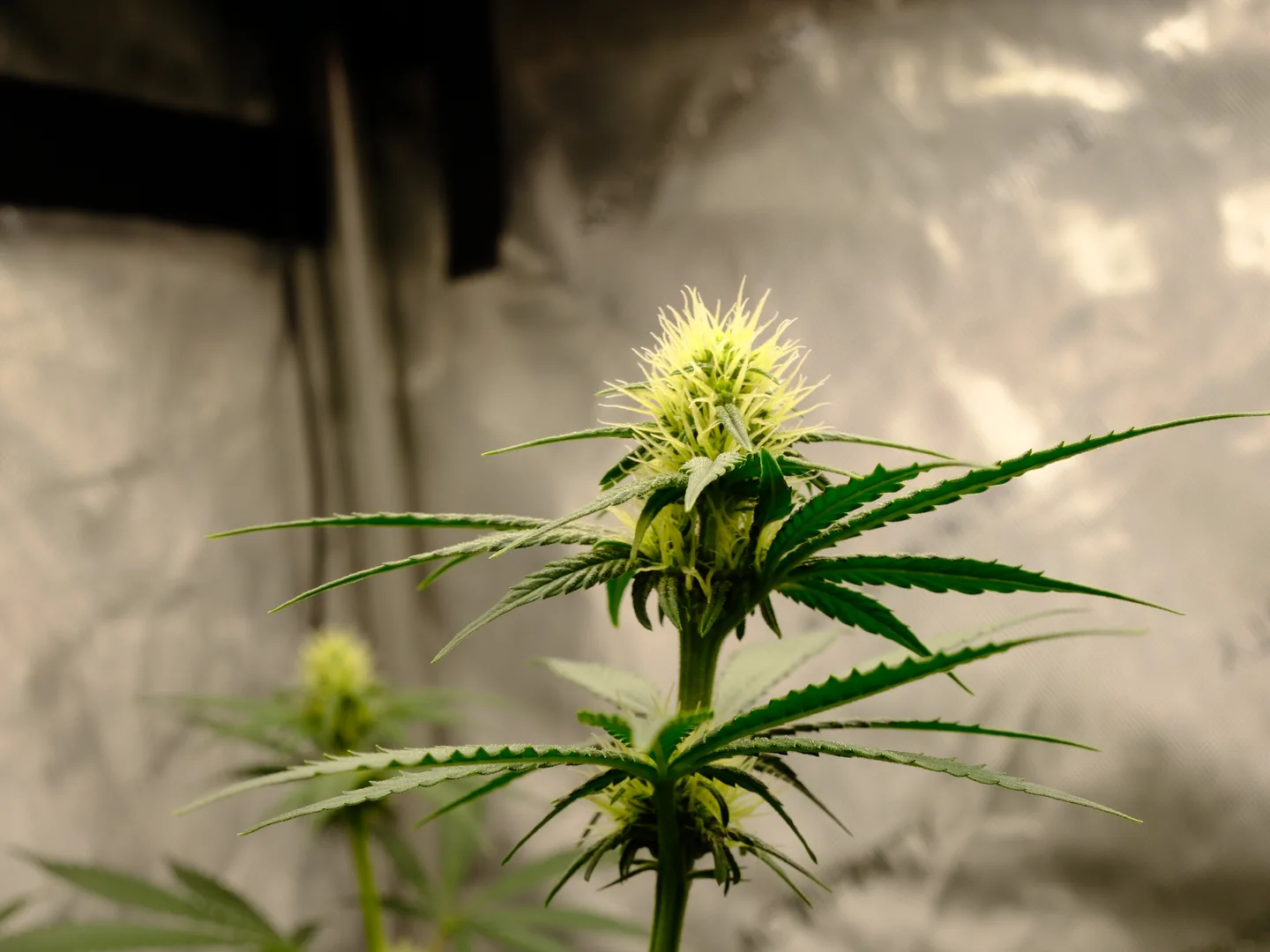
After the switch, the opposite of what you expect happens first: the plant carries on stretching, often considerably. This runs for one to two weeks and is the reason the height at the flip mattered so much.
Only afterwards do the first white hairs appear in the leaf axils. From then on the energy goes into buds rather than height.
If you notice during this time that it is getting tight under the lamp, you still have one option: tie shoots down. Cutting is no longer one.
The list is short, and it is the most important part of this chapter.
Two interventions still make sense in flower, both early and both sparing.
Remove lower shoots that barely see any light: they will only ever make small, loose buds and tie up energy that is better spent higher up. This happens once in the first two weeks, not continuously.
Individual large leaves lying directly on a bud can go — they hold moisture there. Wholesale defoliation is not a yield trick: the plant fills its buds from the leaves it still has.
Buds get heavy, and faster than you would think. A branch leaning under its own weight in week seven snaps in week eight.
The easiest way is a net stretched horizontally over the plants while they are still small enough — shoots that grow up through it support themselves. If you have missed that, tie individual branches to stakes.
In good time means: before it looks necessary. A branch that is already leaning is hard to straighten without breaking it.
Dense buds and still, damp air are the conditions bud rot needs. It starts inside a bud and is only visible from outside once it has been running a while — as a single wilted leaf in the middle of a bud that pulls out with no resistance.
No treatment helps against it, only prevention: a fan moving the air between the plants, enough space between them, and extraction that actually carries the damp air out.
Then there is the humidity itself, which is lowered step by step across the flowering period. At what point it turns critical, and how it hangs together with temperature, comes with a calculator on the VPD page. More important here: look into the canopy once a week, not just across it.
It picks up markedly from the middle of flowering and peaks in the final weeks. Wait until then to react and you have reacted too late.
A carbon filter in the extraction is the usual answer. For it to work, the air has to go through it rather than past it — which means the tent should sit under slight negative pressure, with the walls drawn perceptibly inwards.
The buds now gain density rather than size. At the same time the lower leaves withdraw and yellow — normal at this stage and not a deficiency, as long as it moves from the bottom upwards and the buds themselves stay firm.
Nutrient demand falls again towards the end; the peak sits in the middle of flowering, not at the close. The values per stage are on the pH and EC page.
Exactly when to cut is decided by the plant rather than the calendar — that has a chapter of its own. What you can do until then is plan the date roughly and allow for the drying, which takes a good two weeks on top.
Three things: the day the first pistils were visible, anything unusual on leaves or buds, with the date, and the week you last thinned out.
The first is the real start of the flowering time — breeders' figures usually refer to that rather than to the day of the light switch. Note both and next time you will know how long your own stretch lasted.
Around seven to twelve weeks depending on the strain, and longer with very slow flowerers. The breeder's figure usually refers to the day of the first pistils rather than the light switch — there is another week or two in between. The harvest date calculator adds the two together.
That is normal and it is called the stretch: over the first week or two the height doubles to triples. Only afterwards does the energy go into buds. It is why you switch at a third to a half of the final height rather than at the final height itself.
Individual ones lying directly on a bud and holding moisture there — yes, and early. Wholesale defoliation in late flower costs yield: the buds are filled from the leaves that remain.
Towards the end of flowering it is normal: the plant pulls nutrients out of the older leaves and into the buds. It becomes a concern if it appears early in flower, travels upwards quickly, or the buds themselves go soft.
By a single wilted or discoloured leaf in the middle of a bud that pulls out with no resistance — underneath it the bud is already brown inside. This is why you look into the canopy weekly rather than only across it. Affected parts come out generously.
It is lowered step by step across the flowering period, because dense buds and damp air together are what makes the mould risk. The targets per stage, and how they hang together with temperature, come with a calculator on the VPD page.
Better not. The root shock costs yield and the plant has no time to make it up. If the pot is too small, the moment to fix it was the vegetative stage — now the only thing that helps is watering more often and less at a time.
Once branches start leaning under the weight of the buds, yes. It is easier to stretch a net horizontally beforehand, while the plants are still small enough — the shoots grow through it and support themselves.
Noticeably from the middle of flowering, strongest in the final weeks. A carbon filter belongs in place before that point — and the tent should sit under slight negative pressure so the air goes through the filter instead of past it.
That depends mostly on the amount of light and the area, less on the strain. A realistic range rather than a wishful figure comes from the yield calculator — the numbers on the packet are best cases under laboratory conditions.
The day of the first pistils, anything unusual with its date: CRIS keeps the journal offline on your phone. On the next run you will recognise the same pattern a week earlier.