


Chapter 5 of 6
Few subjects are argued over so heatedly. Part of the argument dissolves, though, the moment you notice that two completely different jobs go by the same name — and only one of them is contested.
When you read "flushing", check first which of the two is meant. The debate you find everywhere concerns only the second.
The argument in favour is plausible: fewer salts in the medium mean fewer salts taken up in the final days. Anyone who has smoked overfed buds knows the harsh aftertaste this is meant to avoid.
Against it stands an equally plausible argument: what is in the plant is in the plant. A week without feed washes nothing out of the tissue — it only makes sure nothing new is added. Controlled comparisons, in which flushed and unflushed plants from the same run were tasted and analysed, found no dependable differences.
What often gets lost in this argument: both sides are talking about a correctly fed plant. Anyone who has run too high for weeks has a problem a week of water will not solve — and for them the first point above is the right one, not this one.
In the app's targets, the final week of flowering is carried as a stage of its own, with an EC target below 0.4 mS/cm. The last week only, and only for strains whose flowering runs at least six weeks.
That is deliberately less than many guides recommend. The reason is the side effect: a plant given nothing but water for two or three weeks winds its leaves down while the buds could still be filling. What you hope to gain in purity, you pay for in yield.
One week costs practically nothing and takes the supporters' argument along with it. That is the reasoning behind it — not a verdict on who is right in the debate.
It is the least spectacular job of the whole run: from that point on there is only water — no feed, everything else as before. You go on watering as needed, no more and no less.
pH still matters. Plain tap water without adjustment often sits well above the target range, and a wrong pH in the last week can trigger deficiencies where there were none.
What is not needed: running litres of water through the pot. That is the job from the first section — problem-solving for a salt build-up, not a routine before harvest.
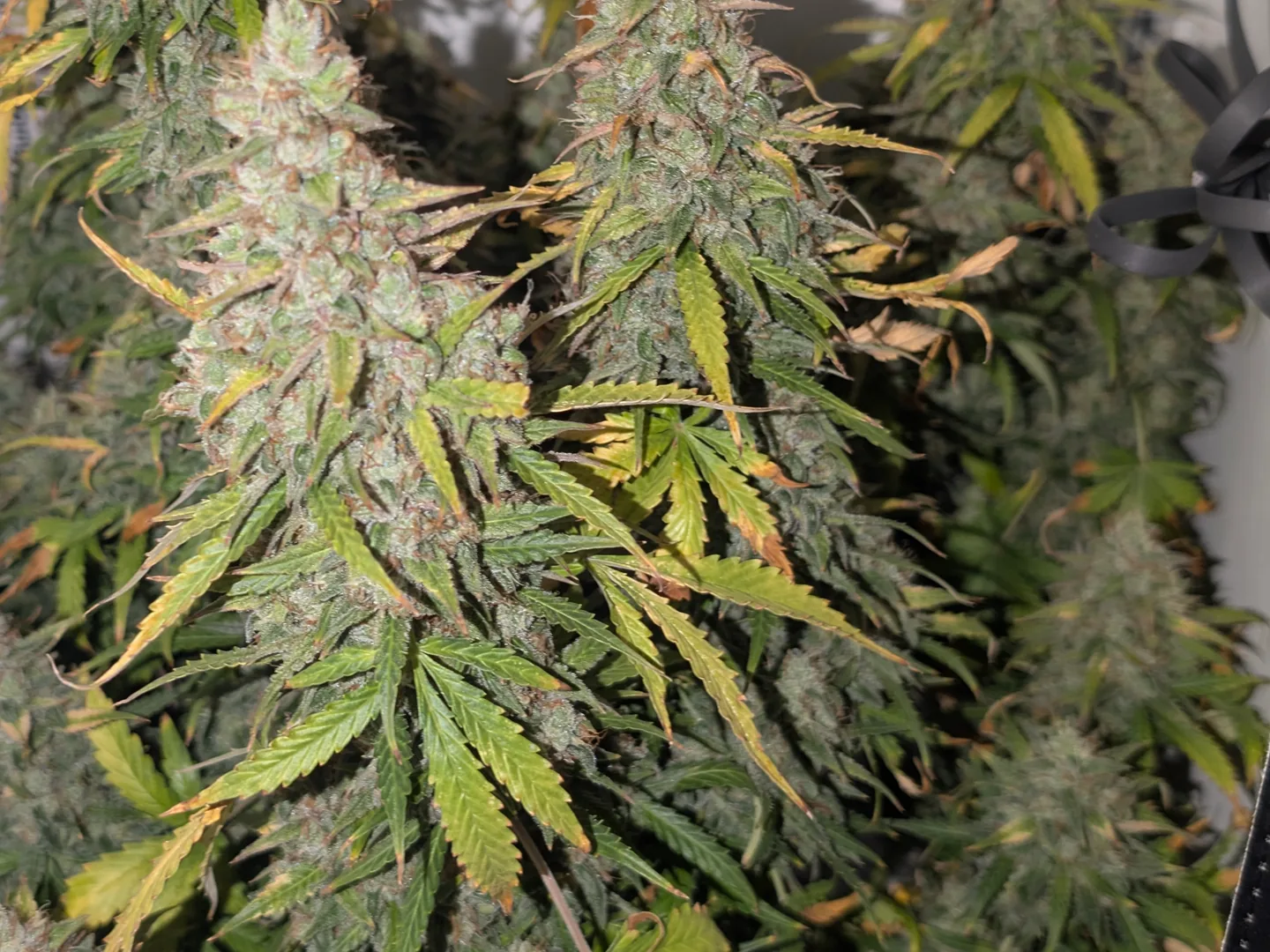
That is the more common mistake, and it has a clear sign: the plant does not only yellow at the bottom but yellows through from the bottom upwards, and the buds visibly stop filling.
Because the end of flowering is rarely predictable to the day, the moment tends to creep forwards — nobody wants to miss it. Better the other way round: a week too late rather than two weeks too early. If you are going to push the cut back anyway, you still have room on the flush.
Counted back from the planned cut: one week before. That assumes the date has been planned at all — and the second half of this sum hangs on exactly that.
The flowering time of the strain is printed on the packet and is the most dependable figure for it. Enter it together with the actual start of flowering in the harvest date calculator and you get the day of the cut — then count one week back from there.
The final cutting date is still decided by the plant, not the calendar. How to read that off it is in the next chapter.
Two things, and both only pay off on the run after next: the day you switched to water, and whether you noticed a difference later on.
That sounds trivial, but it is the only dependable way to form your own view on the question: run one grow with and one without, write both down, and you know the answer for your conditions — and no longer need the debate.
Necessary in the sense of "something goes wrong otherwise" — no. Controlled comparisons found no dependable differences. A week costs practically nothing, though, which is why CRIS carries it as a stage of its own with an EC target below 0.4 mS/cm.
About a week. Two to three weeks, as recommended in some places, costs yield: the plant winds its leaves down while the buds could still be filling.
Flushing out is problem-solving for a salt build-up in the medium and can become necessary in any stage — it is uncontested. Flushing before harvest means the last week on clear water and is the contested practice. For flushing out, with the target values: pH and EC page.
Yes. Plain tap water often sits well above the target range, and a wrong pH in the final week can trigger deficiencies where there were none. Less feed does not mean less care.
The plant does not only yellow at the bottom but yellows through from the bottom upwards, and the buds visibly stop filling. Better a week too late than two weeks too early.
The target is the same, the course of it differs: without a medium to buffer, the plant reacts faster to the change. In soil there is something stored anyway, which cushions the transition.
No more than usual. Running litres through the pot is the job against a salt build-up, not the routine before harvest — on a normally fed plant it achieves nothing and only washes the medium out.
Normal in the final week of flowering: the plant takes what it still needs out of the older leaves. It would be a concern if it appeared early in flower or travelled upwards quickly.
One week before the planned cut. The date follows from the start of flowering and the flowering time of the strain — both go into the harvest date calculator. The final cut is decided by the plant.
The same logic, only less useful on a short flowering time: CRIS applies the flush stage from six weeks of flowering upwards. With very fast strains there is simply no week to spare without taking something away from the plant.
The only answer that counts for your grow comes from comparing two runs. CRIS keeps both, offline and without an account.