


Chapter 6 of 6
Four months of work are decided in two weeks. The cut itself is quickly done — what follows it makes the difference between a good result and one that smells of hay.
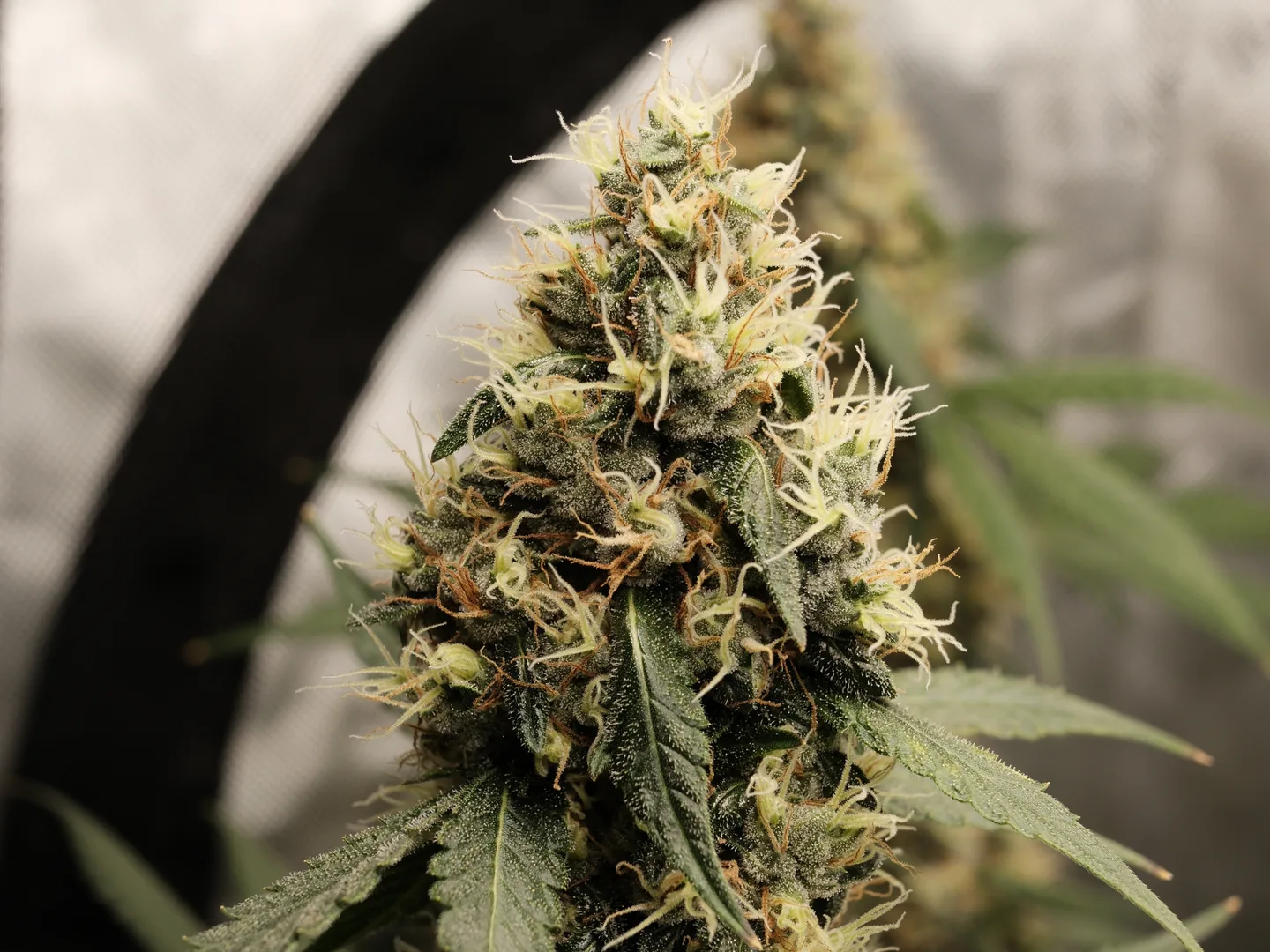
A planned harvest date is a good approximation, no more. Whether you actually cut is decided by the plant — and it shows you in two places.
The pistils are the rough signal: while the white hairs still stand out fresh from the buds, it is too early. Once the bulk of them have curled in and turned orange or brown, the moment is getting closer. That alone is not enough — pistils also discolour from being touched or from dry air.
The trichomes are the precise signal. These are the tiny resin heads on the buds and the small leaves between them. Under a loupe or a pocket microscope three states can be told apart: clear (too early), milky and cloudy (the usual target) and amber (further along).
Most people cut when the bulk is milky and individual heads are turning amber. The important part is looking in several places — the top ripens faster than the bottom, and the small leaves ripen differently from the buds themselves.
In the last few days the plant gets nothing but water — that is the subject of the previous chapter.
It is also common to leave the plant in the dark for a day or two before the cut and to skip watering on harvest day. Both are uncontroversially harmless; whether they achieve anything is not. If you want to try them, write it down — otherwise you end up with two changes and no finding.
Two routes get you there. Whole plant: the main stem is cut through and the plant hung up in one piece. That dries more slowly and more evenly, because the stem holds moisture — the advantage when the air in the room is on the dry side.
Individual branches: they need less space, dry faster and can be judged one at a time. The route to take when you only have a small drying space.
Cut with clean, sharp scissors. Resin sticks immediately and blunts the blade — a cloth and a little alcohol beside you save a lot of irritation.
The large leaves come off either way. The question is when to deal with the small ones standing out of the buds.
The rest comes down to a single rule: it should take about ten to fourteen days. Anything finished in three days smells of hay — the compounds behind scent and flavour are volatile and are lost in air that is too warm or too dry.
What you need is a dark room with a moderate temperature, moderate humidity and gentle air movement. No fan blowing directly at the material — it dries the outside while the inside stays damp.
Too damp is the other danger: if the air stands still and holds too much moisture, mould arrives at exactly the moment everything looked done.
The one reliable test is a thin stem: if it breaks with an audible snap, it is ready. If it only bends, it needs more time.
The buds themselves then feel dry on the outside without crumbling. A little moisture left inside is wanted — it is what the next step works with.
After drying the material is finished but not yet good. Curing lets the remaining moisture spread evenly and allows residues from the plant's metabolism to break down. This is the step that takes away the grassy aftertaste.
For it, the material goes into airtight containers that are opened briefly each day so damp air can escape. More often in the first few days, less often after that. If it smells sharp or musty on opening, it was still too damp — then it has to go back out into the air.
After roughly two weeks the clearest difference has been reached, and with that the run is complete.
Freshly cut material is mostly water. Roughly a fifth to a quarter of the wet weight remains — that is not bad news, it is the normal case, and the reason wet-weight figures say so little.
If you want to estimate in advance what a run will give you, you work in dry weight anyway: the yield calculator starts from area and light and gives a range rather than a wishful figure.
The run is over — and this is exactly where the value for the next one is created. Four figures: the day of the cut, the state of the trichomes at the time, the drying time in days and the dry weight.
The gap between the start of flowering and the cut gives you the real flowering time of your strain under your conditions — the figure on the packet is only a guide. On the next run you plan to within a few days instead of a fortnight.
By the trichomes rather than the calendar: mostly milky and cloudy, with individual heads amber. The orange pistils are only a rough indication. Check in several places — the top ripens faster than the bottom. The approximate date is planned by the harvest date calculator.
About ten to fourteen days. Faster is not a saving in time but a loss in quality — the volatile compounds behind scent and flavour disappear in air that is too warm or too dry.
In one piece it dries more slowly and evenly, because the stem holds moisture — good when the room air is dry. Individual branches take less space and dry faster. Both work; the conditions in the room decide.
Straight after the cut is easier, because everything is still soft — but it then dries faster. After drying, the remaining leaves slow the release of moisture, which helps in dry rooms. The work is fiddlier at that point, though.
By the snap test: a thin stem breaks with an audible snap. If it only bends, it needs more time. The buds are dry on the outside but not crumbly — a little moisture left inside is wanted.
Drying removes most of the water and takes one to two weeks. Curing comes afterwards: in sealable containers the remaining moisture spreads evenly and residues from the plant's metabolism break down. That is the step against the grassy aftertaste.
No. It dries the outside while the inside stays damp — and that is exactly where mould then starts. Gentle air movement in the room yes, a direct stream of air no.
Roughly a fifth to a quarter — fresh material is mostly water. It is why wet-weight figures say so little. A realistic estimate in advance comes from the yield calculator.
It is common practice, not a demonstrated one. It is harmless, though. If you try it, do not change something else at the same time — otherwise you end up with two changes and no finding.
Back out into the air. A sharp or musty smell on opening means there was still too much moisture in the material. This is the moment when weeks of work can still be lost — which is why you open more often in the first few days.
Day of the cut, state of the trichomes, drying time, dry weight: CRIS keeps the whole run — offline and without an account. Next time you plan to the day instead of the fortnight.